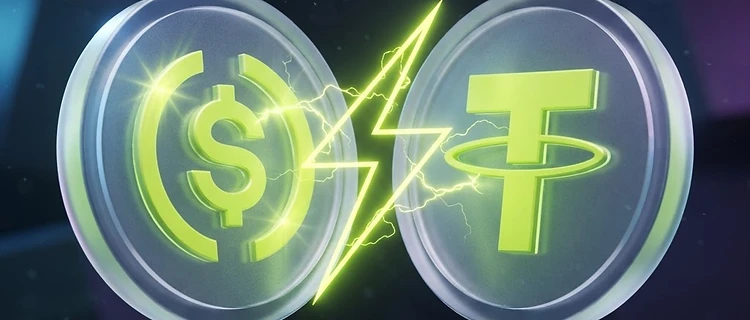
USDC vs USDT: Which Stablecoin Is Better for Payments?
Are you choosing between USDC and USDT? Learn the key differences between these stablecoins and how FinT365 simplifies your cross-border payments.
Ready to get paid in stablecoins?
Open your FinT365 account — receive fiat from clients worldwide and auto-convert to USDC/USDT.
Understanding Stablecoins
In the world of decentralized finance, choosing the right digital asset is critical. When evaluating USDC vs USDT, it is essential to understand that both are pegged to the US Dollar, but they serve different roles in the global payment ecosystem. Whether you are managing international payroll or paying suppliers, understanding these assets is the first step toward efficiency.
What is USDC?
USD Coin (USDC) is a regulated stablecoin managed by Circle. It is widely regarded as the 'transparent' option because its reserves are audited regularly and held in highly liquid cash and short-term US Treasuries. Because of its institutional-grade backing, it is the preferred choice for businesses that prioritize regulatory compliance and financial stability.
What is USDT?
Tether (USDT) is the largest and most liquid stablecoin in the market. Issued by Tether Limited, it has been the backbone of crypto-to-fiat trading for years. It boasts the highest daily trading volume, making it the most accessible asset for businesses operating in emerging markets where liquidity is paramount.
Key Differences
When comparing USDC vs USDT, consider these factors:
- Transparency: USDC provides monthly attestations from top accounting firms, whereas Tether’s reporting has historically been more opaque.
- Liquidity: USDT remains the leader in trading volume, making it easier to exit or enter positions at scale.
- Regulatory Standing: USDC is often viewed as more 'institutionally friendly' due to its strict US-based compliance standards.
Which Is Better for Payments?
Deciding which is better depends on your operational needs. If your business requires strict audit trails and enterprise-grade trust, USDC is the industry standard. However, if you require the absolute highest market liquidity for rapid movement across various decentralized exchanges, USDT is often the superior choice.
FinT365 Supports Both
At FinT365, we recognize that businesses don't want to choose sides; they want results. Our platform supports both USDC and USDT across major networks like Ethereum, Solana, Polygon, Base, and Arbitrum. Powered by Bridge API, FinT365 enables automatic fiat-to-stablecoin conversion, allowing you to accept payments in USD, EUR, GBP, MXN, or BRL and settle them in the stablecoin of your choice. This removes the friction of manual conversion and allows your business to move money at the speed of the internet.
Conclusion
Ultimately, the choice between USDC and USDT comes down to your unique treasury requirements. With FinT365, you gain the flexibility to leverage both assets, ensuring your global operations remain efficient, compliant, and cost-effective. Stop worrying about the underlying asset and start focusing on scaling your business.
Start receiving international payments today
Open a multi-currency account in minutes. Get paid by clients worldwide and auto-convert every payment to stablecoins — only on FinT365.
No credit card required · KYC takes under a minute


